
COPA · Architectural design · Projects · Research · Practice · Contact
Designing the Modern Kitchen: Social, Durable, and Integrated
The Note
The nice thing about designing in 2025 is that many ideas have already been tested, challenged, and reinvented. Kitchens are no longer experiments in newness, but reflections of how people want to live; spaces that can evolve, host, and work hard over time.
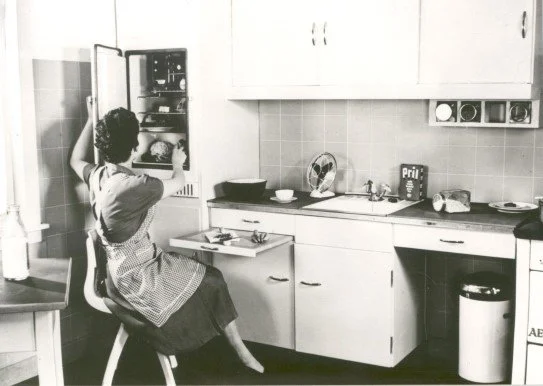
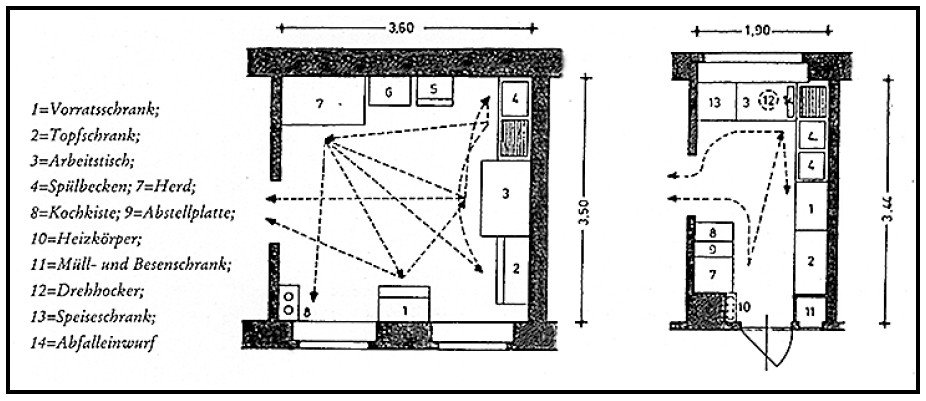
Historically, kitchens were deliberately disconnected; tucked away to isolate smells, noise, and the labor of cooking. In the early 20th century, Margarete Schütte-Lihotzky’s Frankfurt Kitchen formalized this separation through efficiency: a tightly optimized workspace designed around movement, storage, and task flow, treating the kitchen as a machine for living rather than a social room.
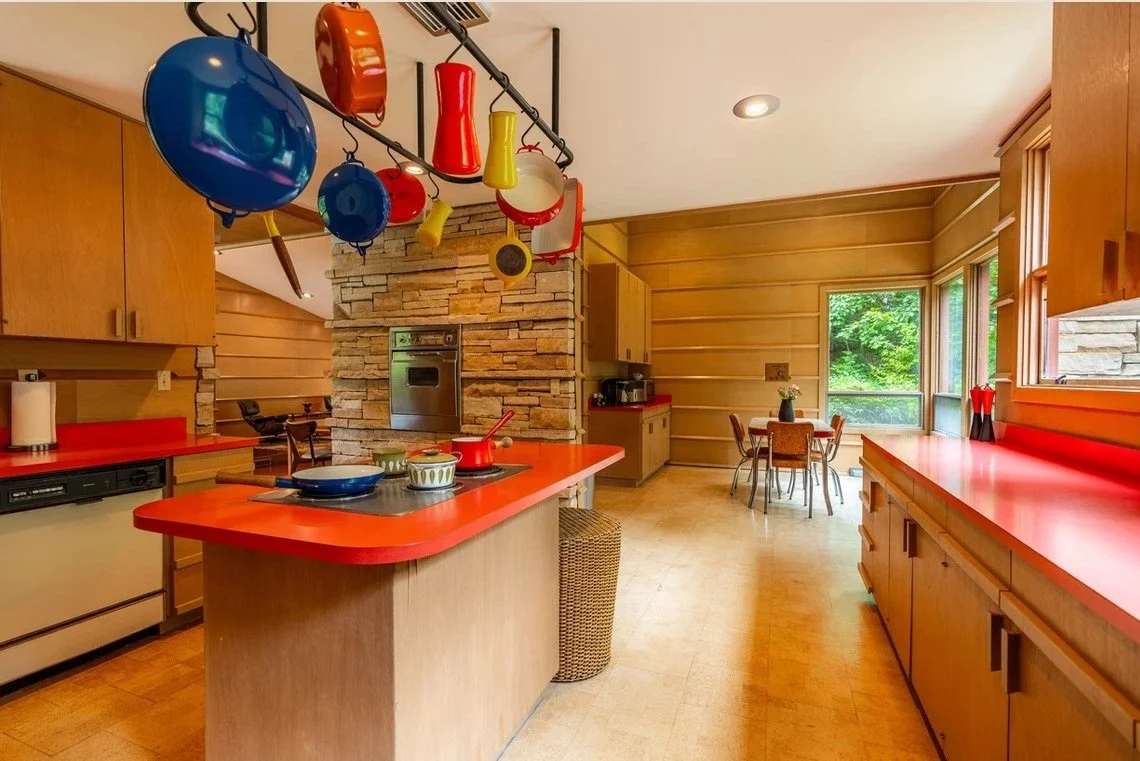
Then came the modern push toward visibility. Frank Lloyd Wright’s Prairie homes blurred the line between cooking and living, a shift that decades later would define entire real-estate markets and recast the kitchen as a place of gathering rather than production alone.
Today, the pendulum has settled somewhere in the middle. Whether a kitchen is open to the living room or hidden behind a pocket door, expectations have changed. Regardless of layout or concept, certain standards now define what makes a good kitchen.
1. A Space for Conversation
The kitchen has become the social center of the home. Even in smaller apartments, we now expect an island with seating, a breakfast nook, or a built-in banquette—somewhere to sit, talk, and stay while food is being made.
Designing for socialization doesn’t necessarily mean more openness; it means proximity and participation. An island that faces the living space or a lowered counter that invites children to help can make the act of cooking more inclusive and welcoming.
At COPA, we often design the kitchen as a hinge between spaces; open enough for dialogue, but distinct enough to maintain a sense of calm.
Below is a recent kitchen renovation in Rhode Island. From the sink, the cook maintains clear sightlines to the family room and dining area beyond. Preserving these visual connections helps maintain relationships; between host and guest, parents and children playing nearby, or the quiet background chatter of a gathering.
2. Designed for Use and Maintenance
Kitchens are about work. Even the most minimal space must withstand heavy use, cleaning, and time. The renewed interest in plywood, stainless steel, and linoleum is not nostalgia, it’s pragmatism.
Plywood millwork offers warmth and durability that MDF and high-gloss finishes often lack. Stainless countertops and backsplashes handle heat, knives, and spills without aging poorly. These materials invite experimentation; the kind that happens when cooking becomes communal, messy, and joyful.
For clients who cook often or host large groups, we design kitchens that celebrate wear. Surfaces that patina gracefully are preferable to those that promise to remain untouched. A modern kitchen shouldn’t feel like a showroom, it should welcome a bit of chaos.
Below is a recent kitchen renovation in New York City. The kitchen opens directly to the living room and children’s play area. During the day, the table becomes a place for homework and crafts; by evening, it transitions naturally into a shared family dining space.
3. Equipment as Integration
Every kitchen revolves around its equipment. The basics, range, hood, refrigerator, and dishwasher—remain constant, but how they’re integrated defines the character of the space.
Ventilation is often the most overlooked component. Whenever possible, a hood should vent directly to the outdoors rather than recirculating air. Proper ventilation prevents grease buildup, controls humidity, and keeps cooking aromas from lingering; especially important in compact homes and apartments.
Panel-ready appliances, such as refrigerators and dishwashers that accept cabinet fronts, have become a quiet standard. They preserve visual continuity, allowing the kitchen to read as architecture rather than machinery.
Garbage disposals should have conveniently located switches, a small but essential ergonomic decision. Wine fridges can act as focal points, but they don’t need to dominate unless collecting is part of one’s lifestyle. Microwaves work best as drawer units below the counter, keeping sightlines clean and freeing up workspace. Coffee stations and other specialized equipment can be tucked behind millwork panels or positioned near breakfast areas for daily use.
At COPA, we approach equipment as part of a single built environment. The goal is not to hide appliances entirely, but to compose them, creating kitchens that feel calm, cohesive, and intentional even when every appliance is in use.
Below is a recently completed kitchen in Brooklyn, New York. The design minimizes visual clutter, integrating appliances and storage to create a clean, cohesive space that welcomes both guests and residents.
After a century of shifting ideas, from hidden kitchens to open plans and back again, the contemporary kitchen is no longer a symbol of a single ideal. It is a working, living space designed for conversation, durability, and integration.
Whether executed in stainless steel and plywood or stone and plaster, the best kitchens share one goal: to make cooking feel like part of daily life rather than a task set apart.
COPA (Cordero Pardee) is an architectural design practice with offices in New York, Los Angeles and Santo Domingo.