
Working Across Scales: Architecture, Furniture, and Everyday Use
Designers often talk about working across different scales; the distinct mindset and parameters required when designing a building versus a room, or a building versus an entire community.
At COPA Architectural Design, we work across multiple scales. Our practice includes individual dwellings, apartments, artist studios, and larger multifamily and urban projects, but also extends to furniture design. Each scale informs the others, allowing ideas to be tested, refined, and re-applied with greater precision.
When working at smaller scales, concepts that shape our architecture become more concentrated. We rely on simple, honest materials to create highly functional objects and spaces that respond to how people actually live. These materials serve multiple goals: aligning with client needs, offering lower-carbon alternatives to conventional solutions, and adapting to the increasingly hybrid ways many of us work, gather, and rest at home.
The Elevator Coffee Table and the Kenzan Dining Table emerged from this process, not as isolated objects, but as architectural studies in structure, movement, and use, translated into furniture.
The Elevator Coffee Table was initially conceived for a small New York City apartment that could not accommodate both a dining room and a conventional living room layout. Positioned between two sofas, the table functions in its lowest state as a simple coffee table, holding candles, books, and other objects that help frame conversation.
Through a system of interlocking dowels and routed grooves, the table lifts and folds outward to reach the height of a dining table—transforming the surrounding sofas into seating for meals.
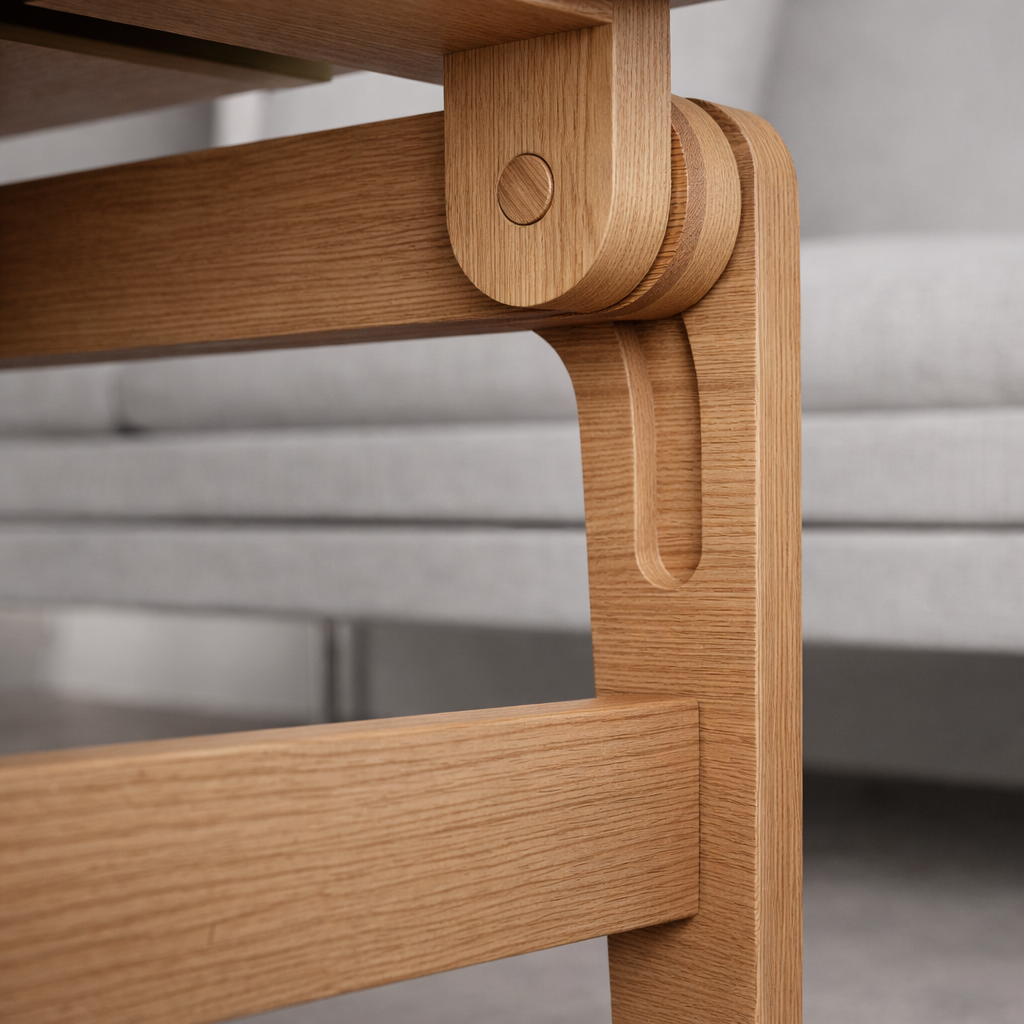
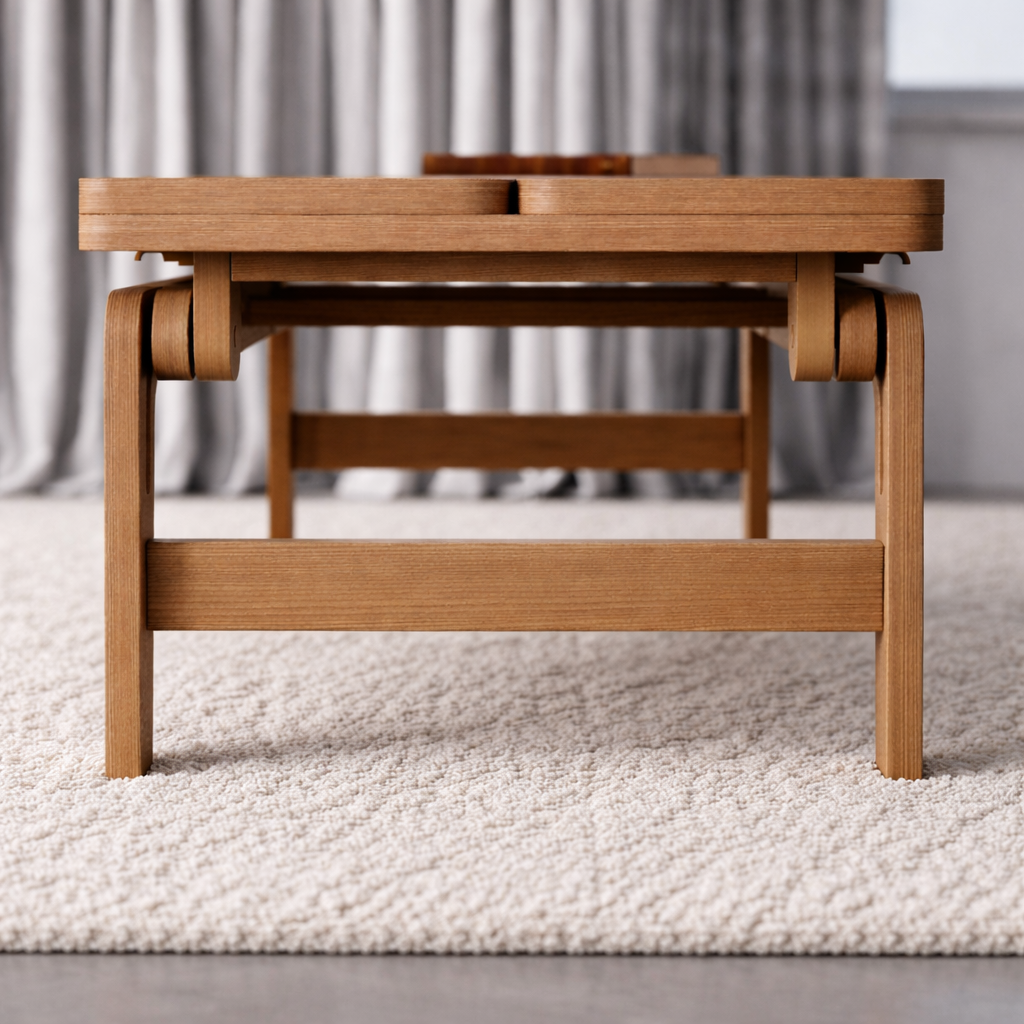
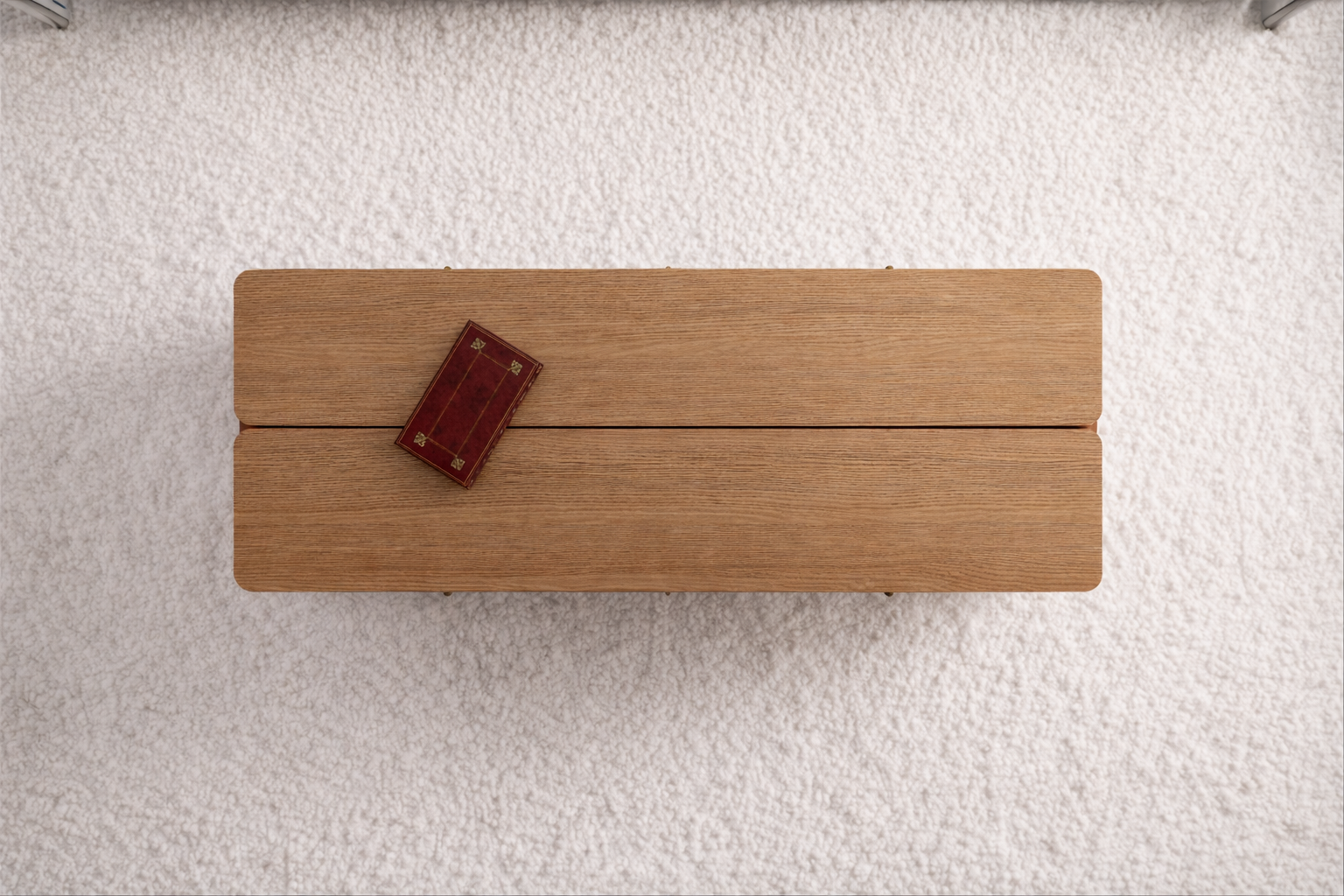
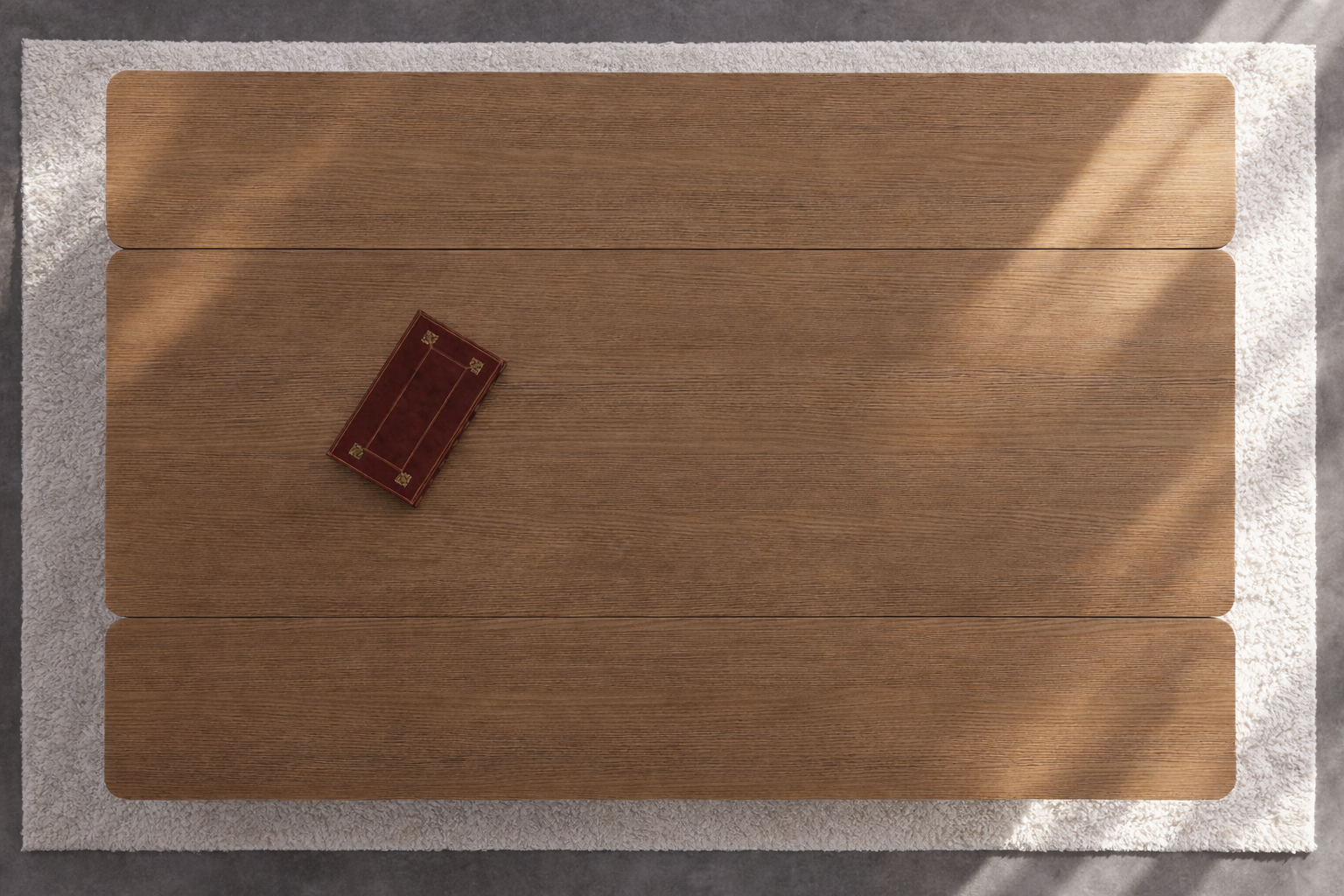
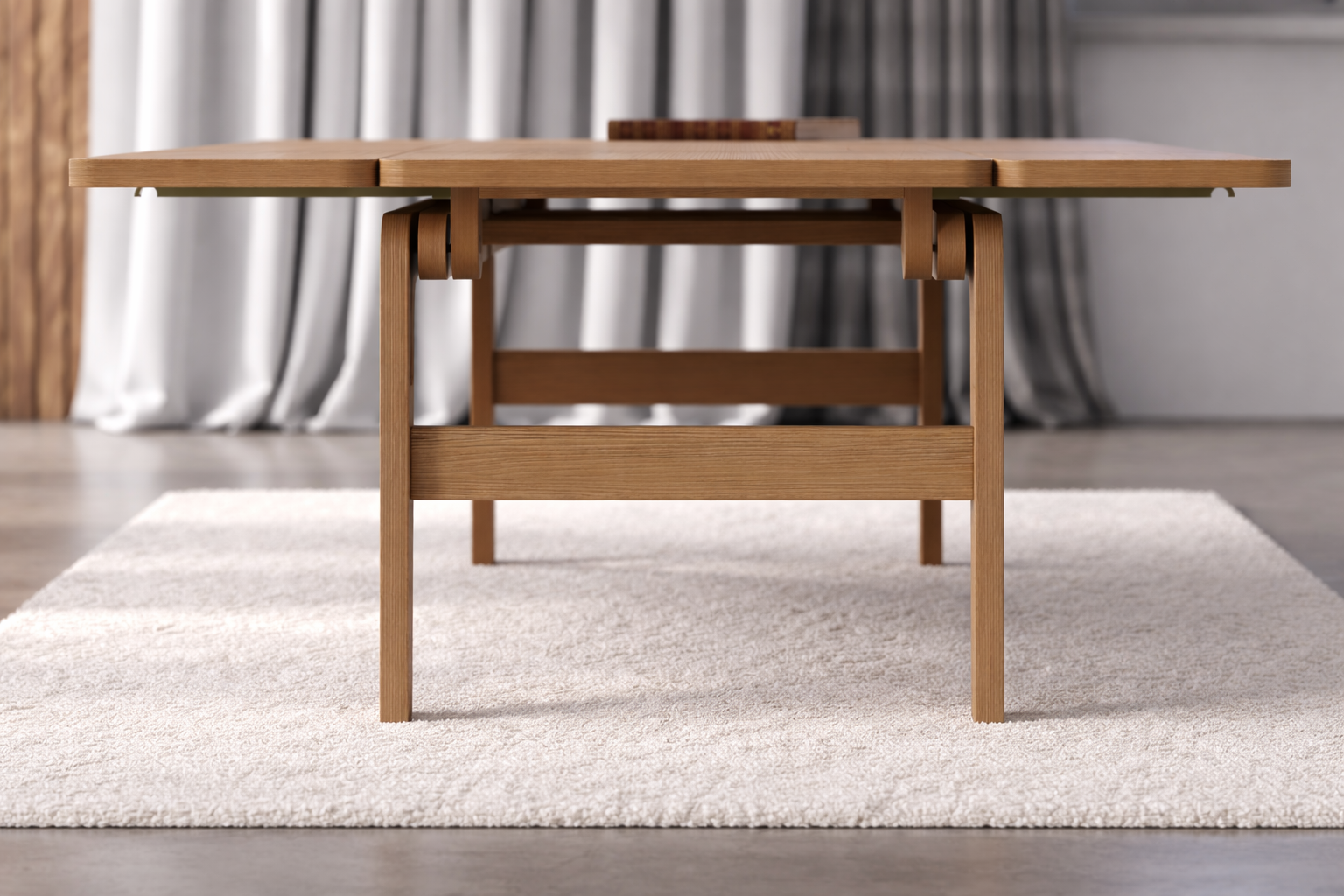
During the creation of these prototypes, what we often refer to as a “happy accident” can occur: a functional outcome that only reveals itself through the act of making and testing. In this case, a third mode emerged. When the table remains at its lower height but is folded outward, it becomes an extra-large coffee table, one that comfortably occupies and anchors a more spacious living room.
Experimentation with folding mechanisms in maple led to the development of a full-scale dining table that adapts to the varied demands of contemporary living. Today, living rooms often serve as the default space for workouts, video calls, holiday gatherings, television, quiet reflection, crafting, and meditation. This table was crafted to move fluidly between these activities, providing a stable surface when needed, while remaining compact enough to give way to messier or more spatially demanding moments.
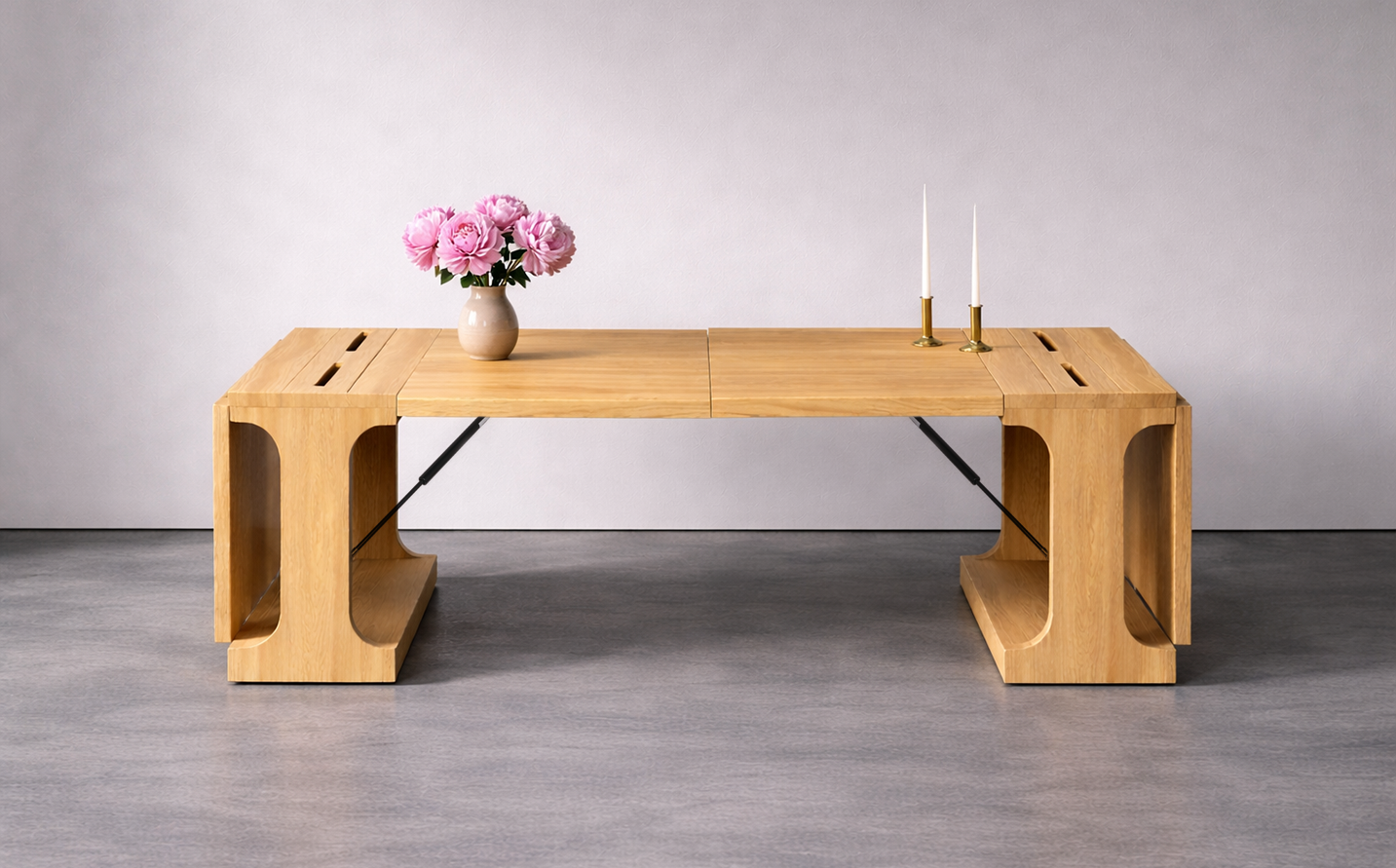
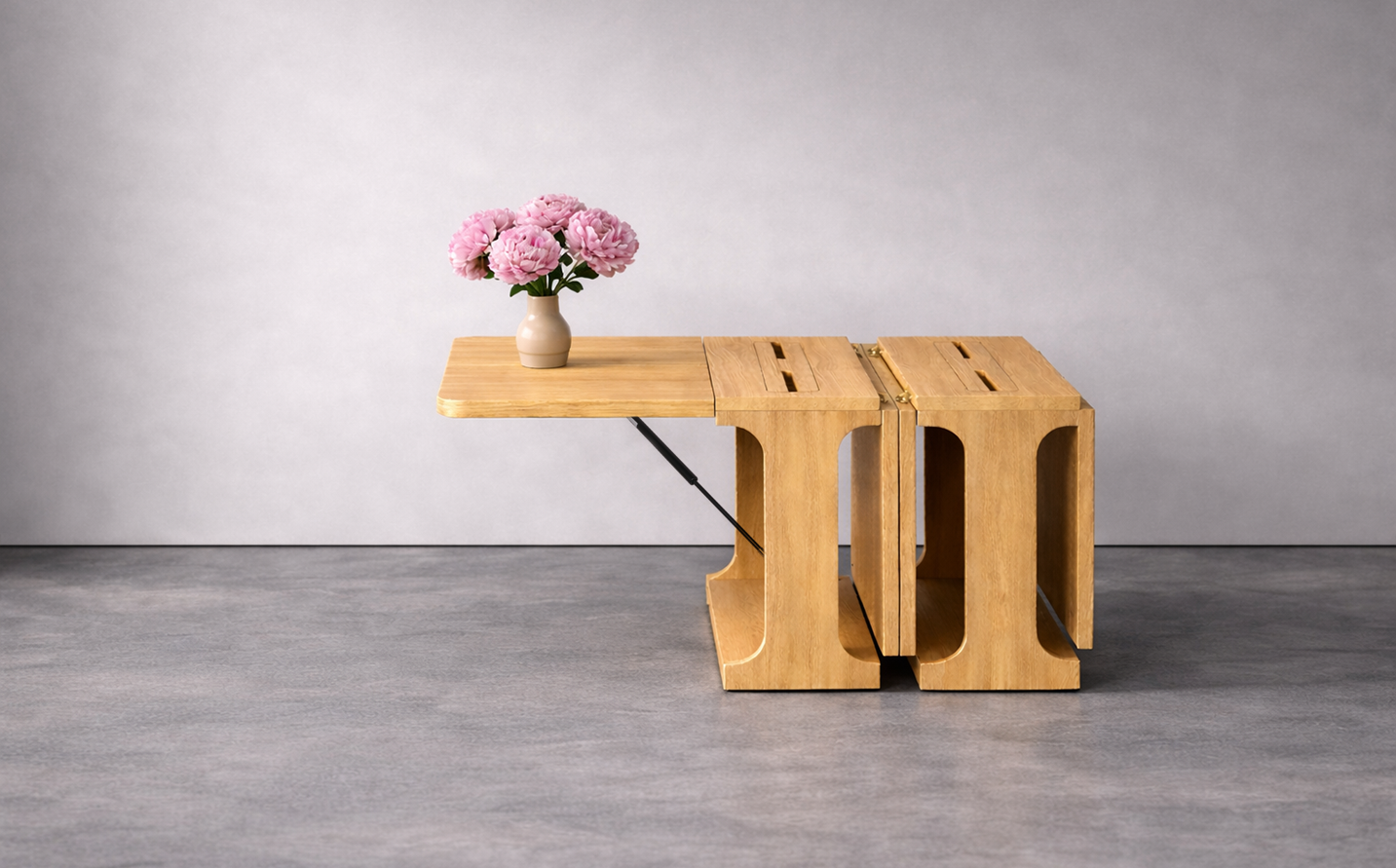
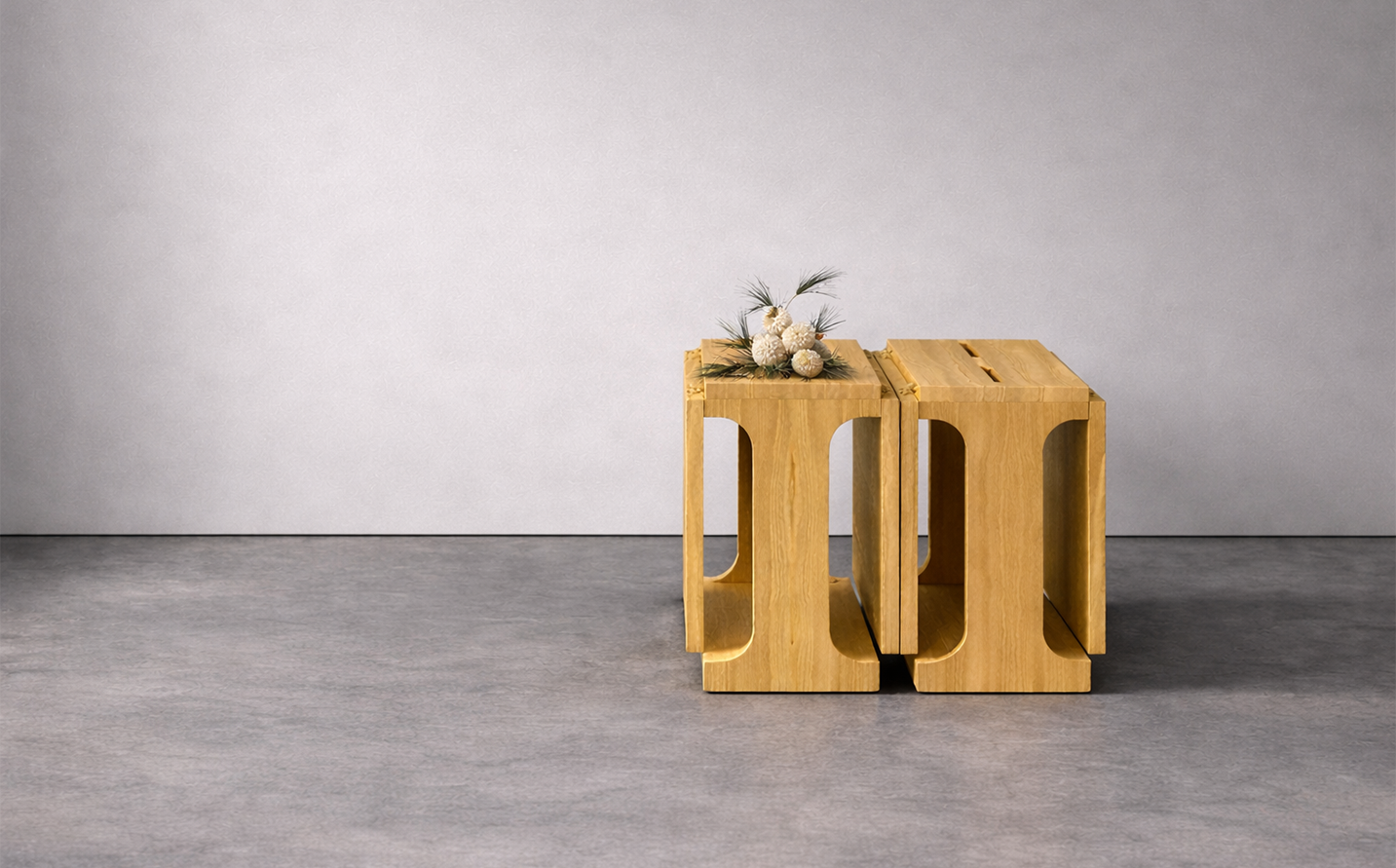
The Kenzan Dining Table builds on these explorations of adaptability and weight. It utilizes standard SOSS concealed hinges and cabinet struts to allow individual tabletop elements—each approximately 2.5 inches thick and weighing roughly 50 pounds, to lift and fold with ease. While substantial enough to act as the visual and physical anchor of a gathering, the table is carefully engineered so that a single person can transition it between configurations.
Embedded within the table’s legs are hidden compartments designed to hold small kenzans used for ikebana floral arrangements. These moments introduce a quieter layer of use, allowing flowers to emerge directly from the structure of the table itself. In practice, the compartments make decoration inseparable from the object, further integrating activity, ritual, and furniture.
Together, the Elevator Coffee Table and the Kenzan Dining Table reflect an approach to design rooted in adaptability, craft, and use over time, where furniture is not static, but responsive, and where architecture’s concerns of structure, movement, and gathering are distilled into the scale of the everyday.